

Regulatory Support for Epicor Kinetic Invoicing
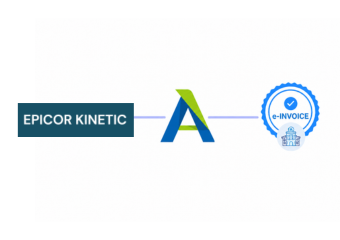
Inside the Epicor Kinetic Advintek Workflow
- Order Data Capture: Advintek receives applicable Epicor Kinetic transaction information and prepares relevant fields for Japanese invoice processing workflows.
- Customer Record Mapping: Customer and account information is associated with suitable invoice fields during structured processing activities.
- Material Data Structuring: Products, materials, quantities, prices, and order information are organized for accurate invoice preparation.
- Tax Information Preservation: Relevant consumption tax information remains connected with transaction values throughout invoice preparation and validation.
- Invoice Record Generation: Validated transaction information becomes structured invoice records for delivery, storage, and financial processing.
- Accounting Data Coordination: Processed invoice information can continue toward Epicor Kinetic financial workflows for reconciliation and reporting activities.
What Advintek Adds to Epicor Kinetic
Advintek connects Epicor Kinetic manufacturing information with Japanese invoice processing, coordinating production, customer, shipment, tax, and accounting records through structured workflows.
- Links production orders with invoice records
- Matches shipments against corresponding billing information
- Coordinates material details with financial data
- Connects customer accounts with ERP transactions
Benefits Across Epicor Kinetic Operations
- Connected Manufacturing Data: Link Epicor Kinetic production information with invoicing and accounting through coordinated financial data workflows.
- Reduced Manual Transfers: Minimize repeated information handling between Epicor Kinetic, invoice preparation, and finance teams during operations.
- Consistent Transaction Records: Maintain aligned product, material, customer, shipment, tax, and billing information across connected processes.
- Improved Financial Reconciliation: Provide structured invoice references for comparing Epicor Kinetic transactions against accounting and ERP records.
- Controlled Production Adjustments: Coordinate order changes, credits, returns, and billing corrections across related financial workflows efficiently.
- Clearer Operational Reporting: Relate manufacturing activity with invoices and financial records for broader business reporting and analysis.
Core Epicor Kinetic Tools for Japan E-Invoicing
Production Field Mapping
Map Kinetic production fields into structured Japanese invoice records for controlled downstream processing.
Shipment Reference Matching
Associate shipment references with invoices to support reconciliation across connected accounting workflows.
Financial Data Review
Review essential billing information before records enter integrated ERP and financial processing environments.
Epicor Kinetic Operations Across Japan Businesses
Epicor Kinetic can connect manufacturing, materials, customer, shipment, and financial information with structured Japanese invoicing across enterprise operations.
- Coordinate production records with accounting systems
- Reconcile shipments against invoice documentation
- Consolidate customer billing across manufacturing operations
- Track order adjustments through financial workflows
For Japanese Business Operations
Coordinate ERP information across connected finance processes.
Link Kinetic production data with Japanese invoice workflows.
Ready e-Invoice System
Frequently Asked Questions Epicor Kinetic ERP E-Invoicing Japan
How does Epicor Kinetic handle customer-specific billing information for e-invoicing?
Epicor Kinetic can maintain customer, account, billing, order, and transaction information that may be required when preparing e-invoices. Advintek can organize relevant fields into structured invoice records and connect them with downstream financial workflows. This helps businesses maintain consistent customer information between Epicor Kinetic, invoice documentation, and connected ERP accounting processes.
What role do sales orders play in Epicor Kinetic invoice processing?
Sales orders provide important context for connecting products, quantities, prices, customers, and transaction references with invoice records. Advintek can process relevant Epicor Kinetic order information before creating structured e-invoice data. This allows finance teams to maintain a clearer relationship between originating sales activity and the invoice records used within accounting workflows.
Can Epicor Kinetic tax information be used during Japanese invoice preparation?
Applicable tax information maintained within relevant Epicor Kinetic transactions can be incorporated into structured invoice processing. Advintek can organize tax-related values alongside product, customer, order, and billing information before downstream processing. This helps finance teams maintain appropriate relationships between transaction-level tax details and the invoice records handled through connected financial systems.
How can Epicor Kinetic support invoice information across multiple business units?
Organizations using Epicor Kinetic across different operational areas can coordinate relevant transaction and billing information through a connected e-invoicing workflow. Advintek can structure applicable records before they reach accounting systems, helping establish consistent invoice processing across business units while preserving references to originating orders, customers, and financial transactions.
What ERP information remains available after Epicor Kinetic invoices are processed?
Relevant invoice references, customer information, transaction details, tax values, product lines, and source ERP relationships can remain associated with processed records. Advintek can help structure these relationships for connected financial workflows. This gives accounting teams useful information for reconciliation, audit review, reporting, and tracing invoice records back to their Kinetic source transactions.