







Japan Compliance, Global Standards and High Security


Japan’s e-Invoicing Framework: What Businesses Should Know
Japan’s e-invoicing environment is supported by the qualified invoice system and JP PINT, Japan’s standard specification for structured digital invoices exchanged through the Peppol network. Businesses can use compatible solutions to create, exchange, and manage electronic invoice data while aligning their processes with Japanese requirements and NTA (National Tax Agency) guidance.
The Digital Agency serves as Japan’s Peppol Authority and manages specifications covering standard invoices, self-billing documents, and invoices for non-tax-registered businesses. This framework supports standardized electronic invoice exchange through Peppol, helping businesses connect invoicing systems and exchange structured data across participating networks.
Which Businesses Use Japan’s Digital Invoicing Framework?
- Japanese businesses issuing qualified invoices to taxable customers
- Organizations adopting JP PINT for structured invoice exchange
- Companies exchanging electronic invoices through Peppol networks
- Businesses preparing invoices for non-tax-registered recipients
- Enterprises handling self-billing documents through standardized systems
- ERP-connected organizations using SAP, Oracle, Microsoft Dynamics, NetSuite, or Odoo

What Your Business Must Do Next
To streamline digital invoicing, businesses can adopt e-Invoicing Solutions in Japan that support:
Structured JP PINT invoice creation and processing
Reliable electronic invoice data validation
Efficient Peppol-based invoice exchange and reporting
How Our Japan Accredited E-Invoicing Platform Works

Invoice Data Conversion
Advintek E-Invoicing Software transforms billing records into structured electronic invoice data aligned with JP PINT specifications, helping Japanese organizations prepare consistent documents for digital exchange.

Secure Peppol Delivery
Once invoice information passes validation checks, the E-Invoicing Software sends the structured document through Peppol to the recipient’s designated access point, maintaining controlled and traceable delivery.

Direct ERP Connectivity
Existing ERP records flow into the E-Invoicing Software without unnecessary rekeying or file handling, helping finance teams reduce repetitive administration and maintain consistent invoice information.

Centralized Invoice Oversight
Businesses can monitor electronic invoice activity, organize transaction records, and manage digital documents from a connected environment designed around Japan’s structured invoicing requirements.
More efficient compliance
Easier to use
Successful e-Invoice submissions
Errors eliminated
Industry Served:
Building Smarter Invoice Operations for Japan
Advintek helps Japanese organizations modernize billing workflows with connected e-invoicing software designed for structured digital invoicing. Our experience spans diverse operating environments, including technology, manufacturing, healthcare, logistics, retail, and other business sectors.
10+ Years
3000+ Clients
70+ Industries
CMMI Lvl 3
ISO 27001:2022 Certified
Integrations:


Built for Japan’s Modern E-Invoicing Needs
Japan E-Invoicing Compliance
E-invoicing software supports structured invoice data and Japanese digital invoicing requirements.
Peppol Exchange
Exchange electronic invoices through Peppol while maintaining connected and traceable business workflows.
Qualified Invoice Handling
Manage qualified invoice details consistently while supporting accurate digital records across business transactions.
ERP System Integration
Connect existing ERP platforms with e-invoicing software for smoother, uninterrupted invoice data flows.
Automated Invoice Management
Streamline invoice creation, checking, routing, and processing while reducing repetitive finance administration.
Japan-Focused Support
Receive practical assistance with implementation, integration, configuration, and ongoing e-invoicing software management.

Japan’s Journey Toward Digital Invoicing
Framework Introduction
Japanese businesses can adopt structured E-invoicing through solutions supporting the country’s digital invoicing framework.
Voluntary Digital Adoption
Organizations can introduce Japan-Invoicing Software to modernize billing processes and strengthen electronic document management.
JP PINT Implementation
Businesses adopting Peppol-based invoicing can use JP PINT specifications for standardized electronic invoice exchange.
Broader Business Adoption
Companies across industries can integrate e-invoicing software with existing systems to streamline structured invoice processing.
Digital Invoicing Infrastructure for Japan
Structured Invoice Readiness
Prepare structured invoice information for electronic exchange through Japan’s Peppol framework
Intelligent Document Handling
Transform billing records into organized electronic documents while maintaining consistent and usable invoice information.
Streamlined Finance Operations
Reduce repetitive finance tasks through automated checks, invoice routing, approval handling, and digital processing.
Connected Business Systems
Bring ERP applications and existing business tools together through APIs for continuous invoice information exchange.
Flexible Cloud Architecture
Manage growing E-invoice volumes with E-Invoicing Software designed for secure, dependable, and adaptable operations.
Why Choose Advintek
Japan-Ready Infrastructure
Advintek’s E-Invoicing Software supports structured invoice preparation for digital exchange through Peppol-connected networks and Japanese requirements.
Peppol Network Connectivity
Our platform enables businesses to exchange structured electronic invoices through Peppol, connecting invoice workflows with participating trading partners.
Structured Invoice Standards
Advintek E-Invoicing Software organizes invoice information into consistent structured data, helping businesses maintain reliable electronic document exchange and processing.
Broad ERP Integration
Connect existing business applications with flexible integrations across SAP, Oracle, Microsoft Dynamics, NetSuite, Odoo, QuickBooks, and other enterprise platforms.
Japan-Focused Implementation Support
Our specialists assist Japanese organizations with configuration, ERP connectivity, workflow design, JP PINT adoption, and electronic invoicing processes.
Enterprise Security Controls
Advintek applies robust security practices, protected data handling, controlled access, and secure infrastructure across digital invoice operations.
Trusted by growing businesses across Japan


Excellent
4.8
Rated 4.8 out of 5 from 3,614 customer reviews.
Everything You Need to Know
What is e-invoicing in Japan?
E-invoicing in Japan involves creating, exchanging, and managing invoice information electronically using structured digital data. The country’s qualified invoice system, supported by guidance from the NTA (National Tax Agency), covers specific invoice requirements for consumption tax purposes, while Peppol provides a standardized network for digital invoice exchange.
Is e-invoicing mandatory in Japan?
A qualified invoice is an invoice containing specified information required under Japan’s qualified invoice system, including details needed to identify applicable tax rates and consumption tax amounts. The NTA (National Tax Agency) provides guidance on these requirements, while e-invoicing software can help businesses organize invoice fields, validate transaction information, and maintain electronic records.
What is JP PINT in Japan?
JP PINT is Japan’s standard specification for e-invoices exchanged through the Peppol network. It provides structured formats for different Japanese invoice scenarios, including standard invoices, self-billing, and invoices involving non-tax-registered businesses. Companies using Peppol-based digital invoicing can use compatible software to prepare structured invoice information and support standardized exchange with participating business partners.
What is Peppol e-invoicing in Japan?
E-invoicing software can support workflows involving qualified invoice information, tax rates, consumption tax amounts, issuer details, validation, and electronic record management. The NTA (National Tax Agency) establishes guidance for Japan’s qualified invoice system and related tax processes, so businesses should configure their invoicing workflows according to applicable requirements.
What is a qualified invoice in Japan?
A qualified invoice is an invoice containing specified information required under Japan’s qualified invoice system, including details needed to identify applicable tax rates and consumption tax amounts. Only registered qualified invoice issuers can issue qualified invoices. E-invoicing software can help businesses organize required invoice fields, validate transaction information, and maintain electronic records that support accounting and tax-related processes.
How can e-invoicing software help Japanese businesses?
E-invoicing software can connect existing business applications with invoice preparation, data validation, electronic exchange, monitoring, and digital record management. Instead of manually transferring information between systems, businesses can establish structured workflows linking ERP, accounting, billing, customer, tax, and transaction data. This can reduce repetitive administration while improving visibility across invoice processing and supporting organized financial operations.
Can Japan e-invoicing software integrate with ERP systems?
Yes. Japan e-invoicing software can be integrated with ERP, accounting, CRM, billing, and other business applications through APIs, files, or other supported connection methods. Platforms such as SAP, Oracle, Microsoft Dynamics, NetSuite, Odoo, and QuickBooks can supply relevant transaction information for invoice processing. Integration requirements depend on the existing system architecture, data structure, and desired workflow.
How does Peppol e-invoice exchange work in Japan?
A typical Peppol transaction uses a four-corner model. The seller’s system connects to an access point, which exchanges the invoice dataset with the buyer’s access point before delivery to the buyer. E-invoicing software can support the preparation, validation, routing, monitoring, and record handling surrounding this exchange while connecting the process with existing business applications.
Does JP PINT apply to every electronic invoice in Japan?
No. JP PINT is the Japanese standard for e-invoices exchanged through the Peppol network, but businesses are not generally required to use JP PINT for every electronic invoice. Japan’s Digital Agency specifically states that using these Peppol standards is not mandatory. Businesses can therefore assess their trading relationships, systems, and exchange requirements when deciding how to implement electronic invoicing.
What should businesses look for in e-invoicing software in Japan?
Businesses should evaluate structured invoice support, Japanese tax requirements, Peppol connectivity, ERP integration, validation controls, transmission, status monitoring, reporting, security, and digital record management. The solution should also fit existing accounting and operational workflows rather than requiring unnecessary manual processes. Organizations planning Peppol exchange should confirm that their provider and implementation approach support the relevant Japanese specifications and network requirements.
Can e-invoicing software support Japan’s consumption tax requirements?
E-invoicing software can support workflows involving qualified invoice information, tax rates, consumption tax amounts, issuer details, validation, and electronic record management. However, software configuration should reflect the organization’s specific tax and accounting processes. Japan’s qualified invoice system establishes requirements for invoices and records used in input tax deduction processes, so businesses should align their implementation with applicable rules.
How can businesses prepare for digital invoicing in Japan?
Businesses can begin by reviewing current invoice workflows, identifying source systems, mapping required invoice fields, checking customer and supplier requirements, and determining whether Peppol exchange is needed. They can then select suitable e-invoicing software, establish data mappings, configure validation rules, connect ERP or accounting systems, test invoice flows, and define monitoring and record-retention procedures.
Can Advintek connect existing accounting systems with Japan e-invoicing?
Yes. Advintek can connect accounting, ERP, CRM, billing, and custom applications with structured Japan e-invoicing workflows. Relevant records can be transformed, validated, and prepared for electronic invoice processing while maintaining relationships with source transactions. Depending on the business environment, the integration can support invoice creation, structured data exchange, Peppol connectivity, status handling, reporting, and digital document management.
What types of businesses can use Japan e-invoicing solutions?
Japan e-invoicing solutions can support businesses across manufacturing, retail, technology, logistics, healthcare, professional services, distribution, and other sectors. They can be useful for organizations managing high invoice volumes, multiple ERP systems, recurring billing, cross-border transactions, or complex finance workflows. Businesses can adopt structured electronic invoicing according to their operational needs, trading relationships, and preferred exchange methods.
Why choose Advintek for e-invoicing software in Japan?
Advintek provides Japan-focused e-invoicing software designed to connect business applications with structured invoice processing and digital exchange workflows. The platform can support invoice data transformation, validation, Peppol exchange, monitoring, reporting, and digital records while connecting with existing ERP and accounting environments. This approach helps businesses organize electronic invoicing without replacing their core financial or operational systems.
Explore the Latest E-Invoicing Updates
UAE e-Invoices with Advintek App
Advintek Invoice Factory App is a mobile solution for UAE businesses that simplifies e-invoicing while ensuring full FTA compliance. It streamlines invoicing with accuracy, security, and efficiency.
Create & Manage Invoices
UAE FTA Compliance Ready
Direct GOVT Submission & Tracking
Download the Advintek Invoice Factory App




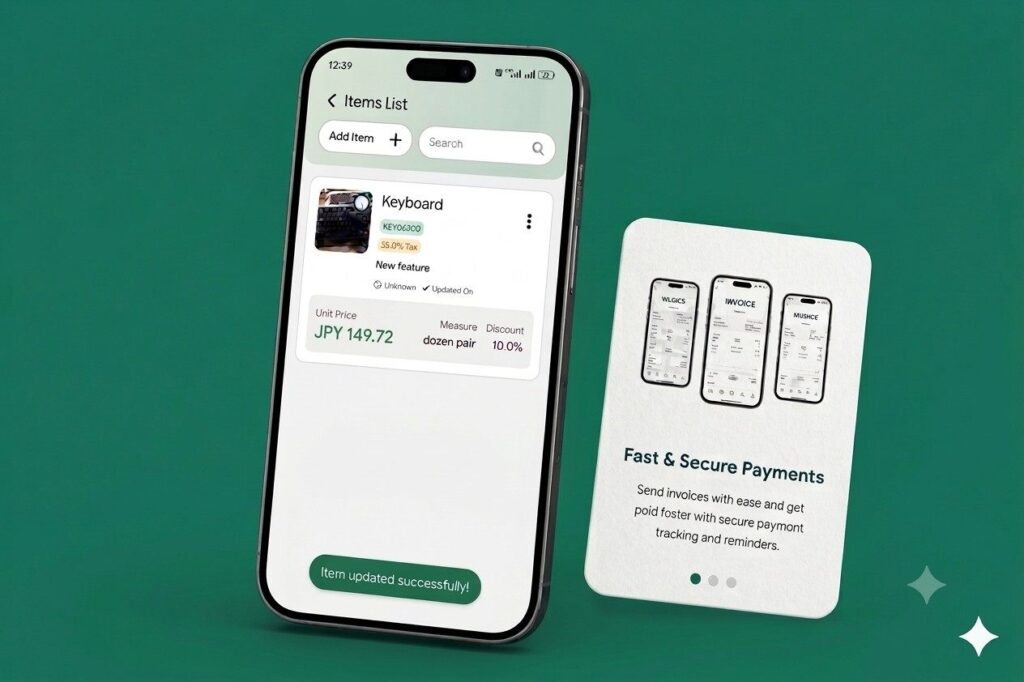
Japan e-Invoices with Advintek App
Advintek Invoice Factory App is a mobile solution for Japan businesses that simplifies e-invoicing while ensuring full NTA compliance. It streamlines invoicing with accuracy, security, and efficiency.
Create & Manage Invoices
Japan NTA Compliance Ready
Direct GOVT Submission & Tracking
Download the Advintek Invoice Factory App